
Kibale Forest National Park
Best Time to Visit
June - September (Chimpanzee tracking), December - February (Forest movement)
Elevation
About Kibale Forest
Kibale Forest National Park is Uganda's top primate destination, located near Fort Portal in western Uganda. The park is known for having the highest concentration of primates in Africa, including Uganda's largest population of chimpanzees.
Its landscape is mainly tropical rainforest, mixed with woodland and grassland along the Rift Valley floor, creating a rich and diverse ecosystem. Kibale is one of the best places in the world for chimpanzee tracking, with over 90% chance of sightings, making it a must-visit for wildlife lovers.
Beyond chimpanzees, the park is home to 13 primate species, over 370 bird species, and a wide range of mammals. With crater lakes, forest trails, and nearby tea plantations, Kibale offers a complete nature and wildlife experience that is both accessible and rewarding.
Key Highlights
- Primate watching
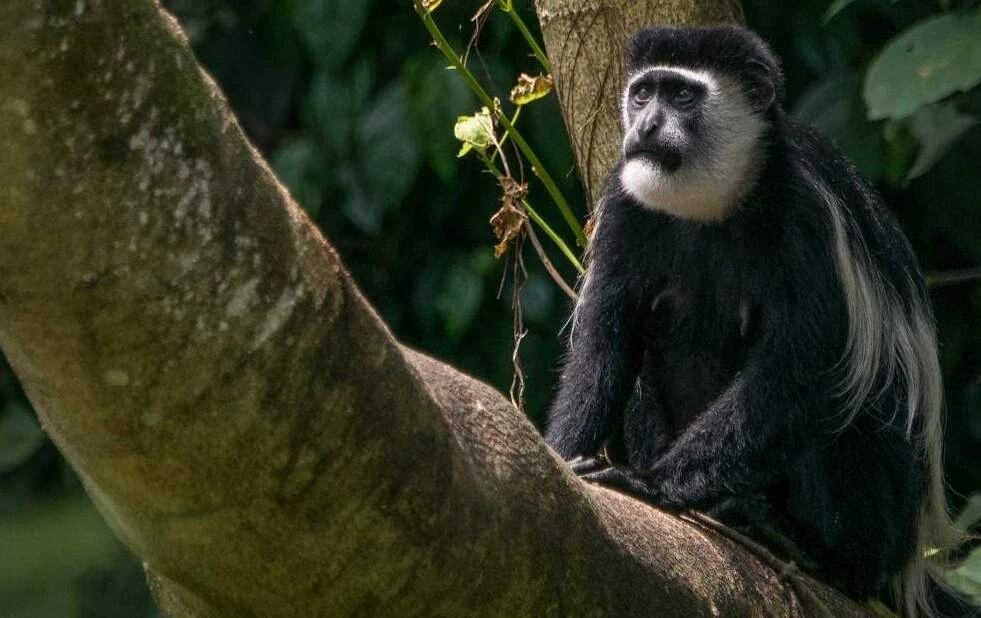
See up to 13 different primate species, including red colobus, black-and-white colobus, and grey-cheeked mangabey in one forest
- Chimpanzee Tracking (Kanyanchu primate walk)
Track wild chimpanzees in their natural forest habitat with over 90% success rate, making it one of the most reliable wildlife experiences in Uganda
- Chimpanzee Habituation Experience
Spend extended time with chimpanzees as they get used to humans, offering a deeper and more raw wildlife experience.
- Bird Watching
Discover over 370 bird species, including rare Albertine Rift endemics, making Kibale a strong birding destination
- Crater Lakes & Scenic exploration
Visit beautiful crater lakes and enjoy views of tea plantations and rolling landscapes around the park
- Research & Eco-tourism experience
Explore one of Africa's leading tropical rainforest research sites, attracting scientists and conservationsists from around the world